
On site and workshop line boring
Line boring in Hay
Hay is a straight run north for us, around two and a half hours up the Cobb Highway. We bring the boring bar to the machine, weld the worn bore back up and cut it true on site, so nothing has to be floated off the plains to get fixed.
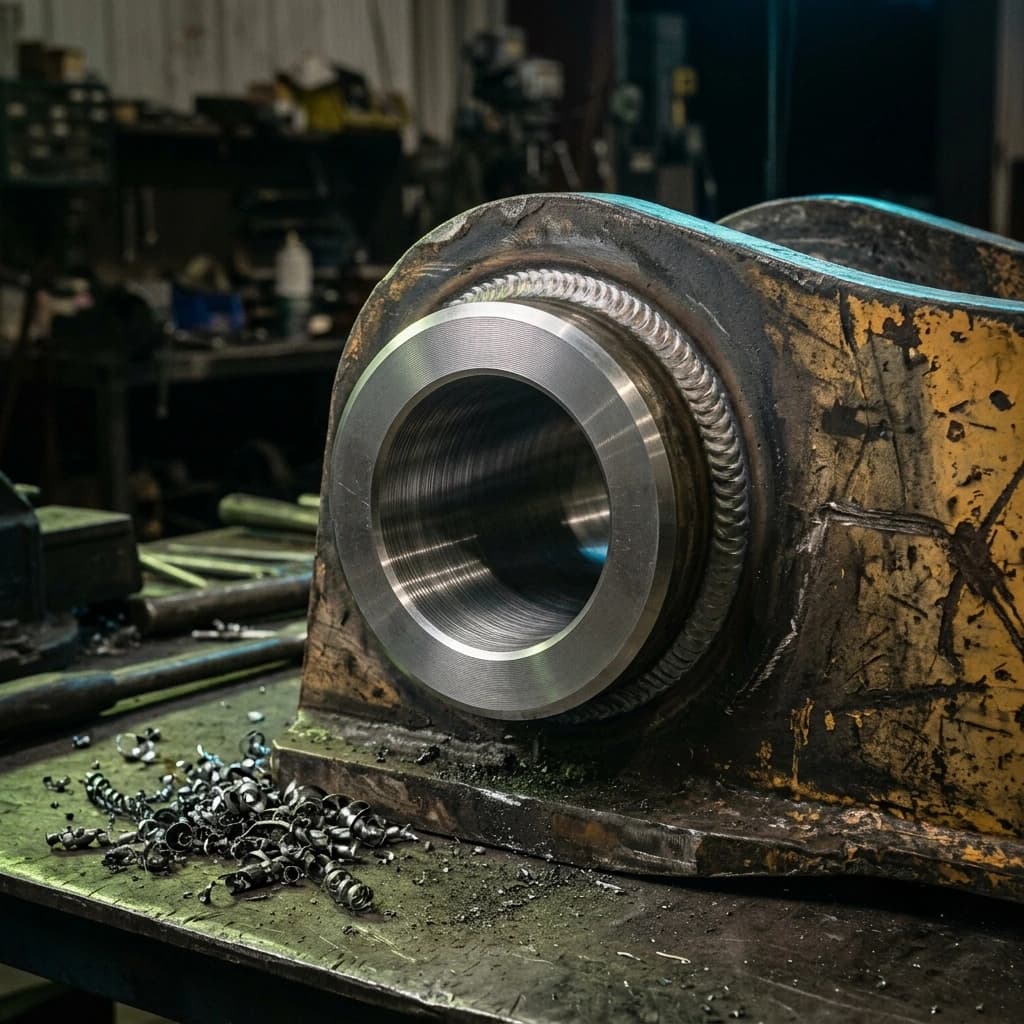
Mobile set-up
We come to the machine
Workshop
Fully set up at Wharparilla
Breakdowns
Callouts by arrangement
Hay NSW
What we see around Hay
Hay is around two and a half hours from the workshop, straight up the Cobb Highway through Deniliquin. That is the same road we run to Deni constantly, so Hay is really just the far end of it. Out here the float cost is what makes on site work worth it. If the machine cannot move, we come to it.
The plains run on sheep and wool, broadacre cropping and irrigation off the Murrumbidgee. Loaders, tractors and post drivers on station work, headers and chaser bins through harvest, and excavators on channel and drain work. Add the distance between properties and a machine sitting idle out here costs more than the same machine parked in town.
Being a long way from anywhere cuts both ways. Nobody wants a two hour drive to a workshop and then a wait for a slot, so it pays to get a pivot done while it is only knocking. Called in early it is welding, boring and new bushes in a day. Left alone the housing goes past repair, which means a new component and freight to match.
~225km from the workshop
Around two and a half hours, straight up the Cobb Highway through Deniliquin
What we get called to
Tractors and front end loaders, post drivers and station plant, headers and chaser bins, excavators on channel and drain work, stock crates and livestock trailers, plus general farm and irrigation gear.
Local industries we work with
- Merino sheep and wool
- Irrigated cropping
- Broadacre
- Livestock transport
What line boring actually does
Every pivot on a machine wears. Grease breaks down, dirt gets in, and the pin starts working the hole. What began as a round bore slowly goes oval, the pin loses its fit, and the play works its way through the whole linkage.
Line boring fixes that in place. A boring bar is set up through the worn hole and aligned to the original centreline, the bore is built back up with weld, then machined true to size so a standard bush and pin drops straight back in. The machine usually needs pulling down to get to the pivot. We can do that for you, or you can have it stripped and ready before we arrive.
Left too long, that play stops being a bore problem. It cracks weld seams, elongates the housing past repair and puts load through things that were never meant to carry it. Caught early, it is a day of work. Caught late, it is a new component.
The short version: if you can rock the attachment by hand and feel movement in the joint, the bore has worn and it is worth a look before it costs you a component.
Signs you need line boring
- Slop or knocking through the linkage under load
- Bucket or blade wandering off line
- Pin holes gone oval or egg-shaped
- Pins spinning or seizing in the bore
- Grease weeping straight back out of the joint
- Cracked or dished bush housings
Spotted one or more of these? Give Sean a call and describe what the machine is doing. You will get a straight answer on whether it needs boring now or can wait.
What we line bore
Twenty years across mining, agricultural, civil and factory work. If it pivots and it has worn, there is a good chance we have bored one before.
Excavators & dozers
- Boom and stick pivots
- Bucket ears and links
- Blade and C-frame pins
- Ripper and hitch bores
Loaders & trucks
- Loader linkage and bucket pins
- Articulation joints
- Tipper body hinges
- Suspension and spring eyes
Agricultural gear
- Front end loader arms
- Three point linkage
- Header and harvester pivots
- Trailer and hitch points
Fixed plant
- Crusher and screen pivots
- Conveyor bearing housings
- Press and baler linkages
- Gate and chute hinges
How a line boring job runs
No mystery and no runaround. Here is exactly what happens from the phone call to the machine going back to work.
You call, we talk it through
Tell us the machine and which pivots feel worn. We work out whether it is an on site job or one for the workshop, and what it will take.
We come to you
The mobile set-up carries the boring bar, welder and power. Farm, pit, yard or factory floor, the machine stays where it is.
Strip and measure
Pins and old bushes come out, the bore gets measured, and we confirm how far it has worn before anything is cut.
Weld and bore true
The bore is built back up with weld, then the bar is aligned to the original centreline and the hole is machined round and back to size.
New bushes and pins
Fresh bushes pressed in and pins fitted, so the joint sits tight the way it did when the machine was new.
Checked before we leave
Measured against spec, moved through its range and greased up. You see it working before we pack up.
Why owners keep calling us back
No fuss, no runaround. Just honest work that holds up and gets your machine back to earning.
Quality of workmanship
Every repair is done properly the first time. Bored true, welded clean, measured and checked before it leaves.
Care for safety and equipment
Your machine gets treated like ours. Safe practice on site and respect for the gear we work on.
Reliability
When we say we will be there, we are. Straight answers, on time, and a fix that holds up.
the trade
My promise to you
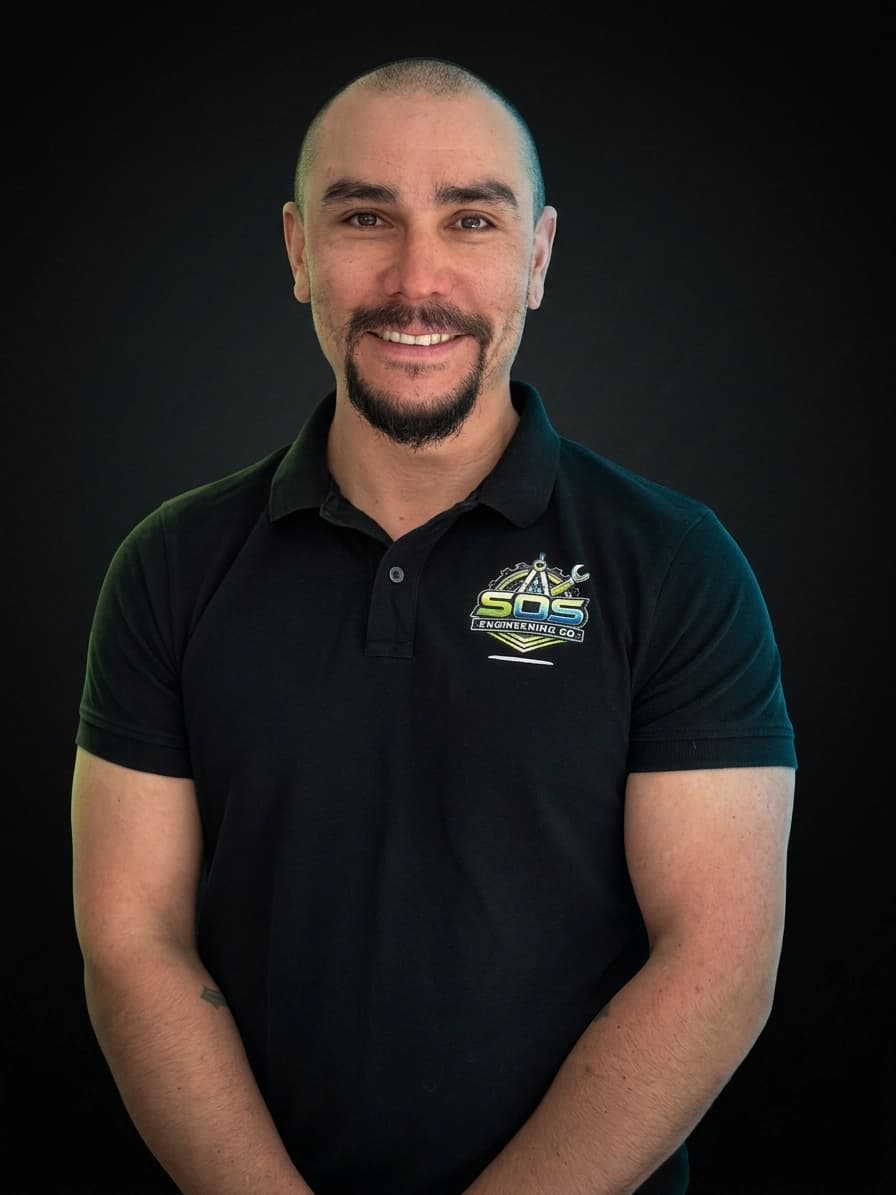
G'day, I'm Sean. After 20 years in the trade, I decided to open SOS Engineering. That is two decades across mining, agricultural, civil and factory work, so there is not much machinery I have not had my hands on.
When you call, you deal with me. Whether it is a breakdown that cannot wait or a scheduled service to catch the small stuff early, you will get a straight answer, honest work, and a fix that holds up.
That is the deal: I look after your gear like it is my own, and I keep you moving.
Great service, keeping you moving.
Sean O'Sullivan
Line boring on the Hay plains
Hay is around two and a half hours north of the Echuca base, straight up the Cobb Highway past Deniliquin. Booligal, Maude, Oxley, Carrathool, Booroorban and the stations in between are all part of the same run. If you have more than one machine needing attention, line them up and we will work through them in the one visit rather than heading back up a fortnight later.
Hay
Planned run
~225km
Travel from base
Line boring FAQs for Hay
Yes. Hay is around two and a half hours north of the Wharparilla workshop, straight up the Cobb Highway through Deniliquin, and that is a road we are on constantly. The mobile set-up carries the boring bar, welder and generator, so we can work in a paddock, a shed or a yard without the machine going anywhere.
Line boring in other towns we cover
The mobile set-up runs right across northern Victoria and the southern New South Wales side. If your town is not listed, call anyway and we will sort it.
Got a machine down? Let's get you moving
Call Sean with a quick rundown of the job and the machine. Straight answer, no runaround, on site or in the shop.
Call Sean
0402 806 636
sosengineeringco@outlook.com
Workshop
1046 Mount Terrick Rd, Wharparilla VIC 3564
Hours
Mon to Fri, breakdowns by arrangement